
The Indian aviation industry is undergoing a major transformation. While large narrow-body aircraft such as the Airbus A320 and Boeing 737 continue to dominate domestic operations, regional connectivity is creating new opportunities for commercial pilots trained on turboprop aircraft, especially the ATR 72-600.
With airlines increasing regional connectivity, expanding fleets, and adding more ATR aircraft to their operations, the demand for pilots with an ATR 72-600 Type Rating is expected to grow.
Completing an ATR 72-600 Type Rating in India can be a strategic career move for CPL holders and pilots looking to build experience in regional airline operations.
What Is an ATR 72-600 Type Rating?
A Type Rating is a specialised aviation qualification that allows a pilot to operate a specific aircraft type. A CPL holder cannot fly every commercial aircraft automatically; additional training and certification are required for specific aircraft models.
An ATR 72-600 Type Rating provides pilots with aircraft-specific knowledge and operational skills required to fly this turboprop aircraft safely.
FSTC provides ATR 72-600 Type Rating training with structured ground training and simulator sessions designed for airline operational requirements.
Why is the ATR 72-600 Becoming Important for Indian Aviation?
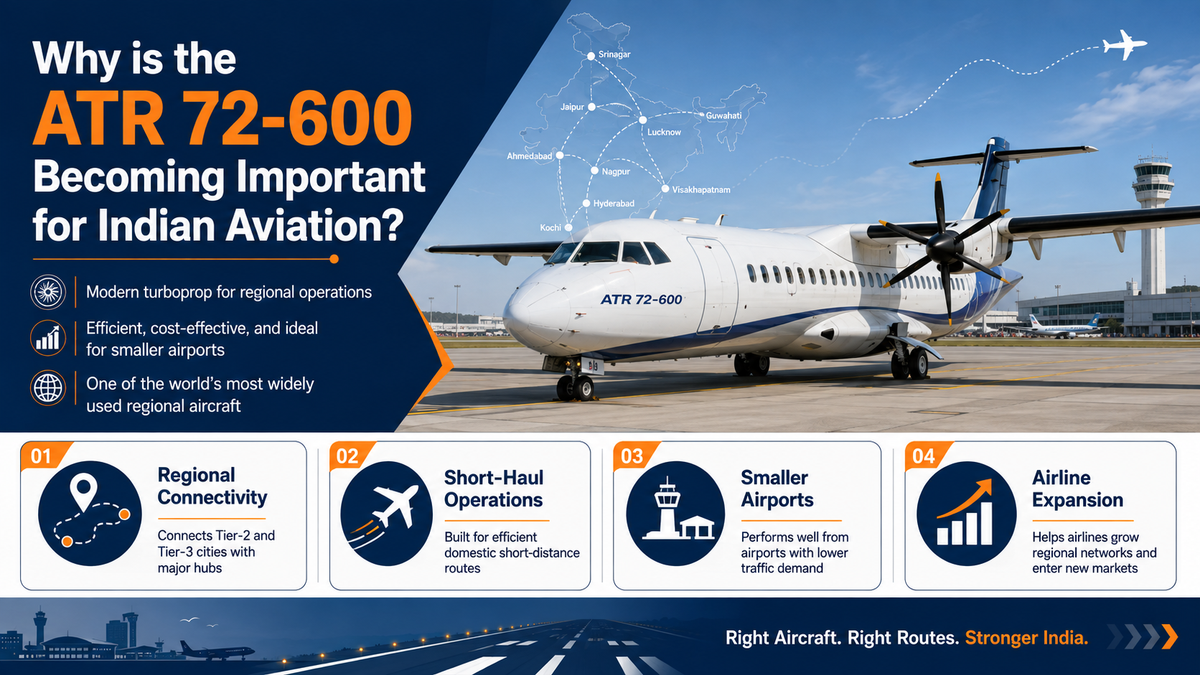
The ATR 72-600 is a modern turboprop aircraft designed specifically for regional operations. Its efficiency, lower operating costs, and ability to operate from smaller airports make it suitable for connecting cities that may not require larger jet aircraft.
It is one of the most widely used regional aircraft in the world.
India has hundreds of airports and airstrips, but many regional routes cannot support large narrow-body aircraft operations. This creates a strong role for regional aircraft like the ATR 72-600.
The aircraft is particularly suitable for:
- Regional Connectivity: The ATR 72-600 connects smaller Tier-2 and Tier-3 cities with major aviation hubs, helping airlines improve regional air connectivity.
- Short-Haul Operations: It is designed for efficient short-haul operations, making it suitable for domestic routes with shorter flight distances.
- Smaller Airports: The ATR 72-600 can operate effectively from smaller airports, supporting connectivity to locations with lower passenger demand.
- Airline Expansion: It enables airlines to expand their regional networks and introduce services to new markets.
The Growing Demand for ATR 72-600 Pilots in India
The aviation industry follows a simple relationship:
More aircraft = More trained pilots required.
As airlines add more ATR 72-600 aircraft to their fleets, they need qualified flight crew to operate them. This creates opportunities for:
- ATR 72-600 First Officers
- Experienced ATR pilots progressing towards command positions
- Pilots looking to enter regional airline operations
However, airline recruitment does not happen overnight. Fleet growth, pilot training, regulatory approvals, and operational planning all take time.
This is why pilots who prepare early can place themselves in a stronger position when airlines increase recruitment.
The best time to complete a type rating course is not always when hiring is at its peak. Often, pilots who are already qualified have an advantage because they are ready when opportunities become available.
Why Should Pilots Consider ATR 72-600 Type Rating Now?
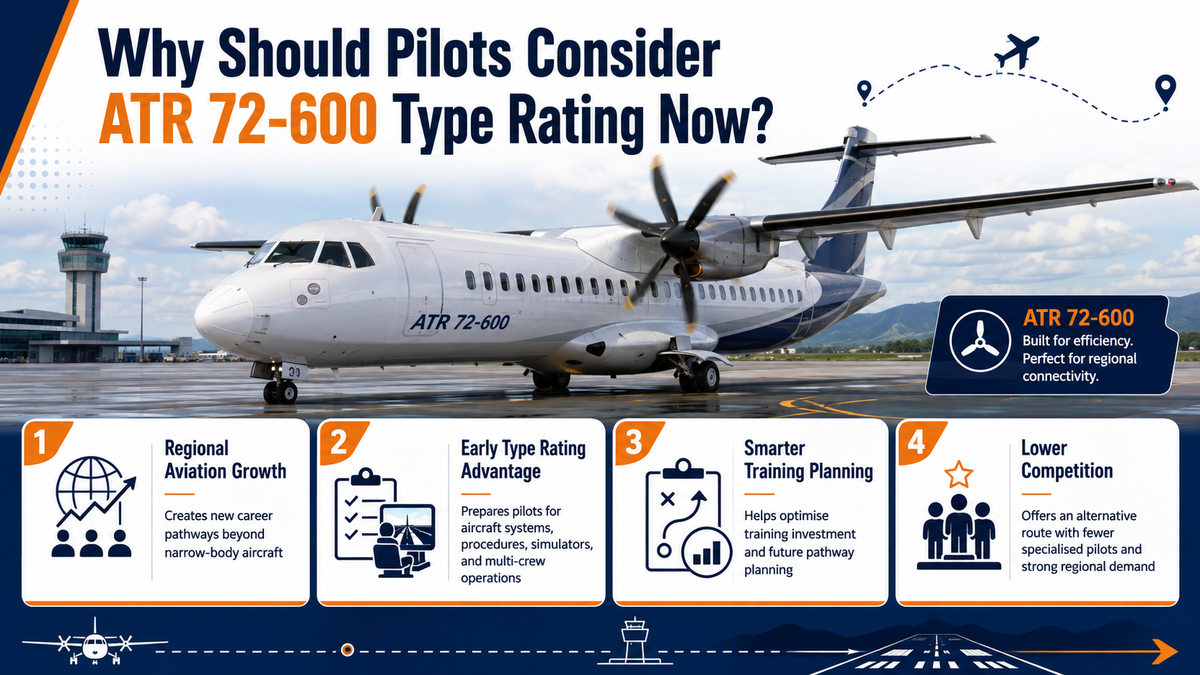
There are several reasons why candidates should consider starting their ATR 72-600 Type Rating journey now:
Regional Aviation Growth Is Creating New Career Pathways
Earlier, many aspiring pilots focused primarily on Airbus A320 or Boeing 737 operations because these aircraft represent major airline fleets.
However, the aviation ecosystem is broader than narrow-body aircraft.
Regional airlines require pilots who are trained for aircraft specifically designed for their operations. The ATR 72-600 provides pilots with another pathway into commercial aviation.
Being Type Rated Before Recruitment Cycles Can Provide an Advantage
Airlines generally prefer candidates who meet their operational requirements and can progress through training efficiently. FSTC, one of the top pilot training institutes in India, provides ATR 72-600 Type Rating training designed to help pilots transition from general commercial flying qualifications to aircraft-specific airline operations.
An ATR 72-600 Type-Rated pilot already understands:
- Aircraft systems
- ATR operating procedures
- Simulator-based scenarios
- Multi-crew cockpit environment
This does not guarantee airline selection, but it can help candidates become better prepared for airline assessments and interviews.
Strategic Planning Can Help Optimise Pilot Training Investment
Pilot training requires significant financial planning. Choosing the right training pathway at the right stage can make a difference.
Some aspiring pilots plan their CPL journey while considering future aircraft requirements. FSTC’s integrated commercial pilot course approach allows students to plan their CPL and advanced aircraft training pathway more effectively.
Depending on the approved training structure and DGCA requirements, combining the right training stages may help optimise overall training investment and reduce the need for additional training later.
Lower Competition Compared to Popular Jet Aircraft
Many aspiring pilots focus only on Airbus A320 or Boeing 737 type ratings because these aircraft are commonly associated with major airlines.
However, this creates intense competition among fresh pilots.
ATR 72-600 offers an alternative career route because:
- Fewer pilots specialise in turboprop aircraft compared to popular jet fleets
- Regional airlines require trained ATR crew
- ATR experience can help pilots build commercial flying hours
Choosing the right aircraft category can become an important career decision for young pilots entering the aviation industry.
ATR 72-600 Type Rating vs A320 Type Rating: Which One Is Better?
A common question among aspiring pilots is whether they should choose ATR 72-600 or an A320 Type Rating.
The answer depends on individual career goals.
Factor
ATR 72-600
Airbus A320
Aircraft Category
Regional turboprop
Narrow-body jet
Typical Routes
Short-haul regional routes
Domestic and international routes
Common Operators
Regional airlines
Full-service and low-cost carriers
Career Path
Regional aviation experience
Mainline airline operations
Competition
Different talent pool
Higher competition among fresh pilots
There is no universally "best" aircraft type rating. The right choice depends on market conditions, personal goals, financial planning, and airline opportunities.
Who Can Apply for ATR 72-600 Type Rating?
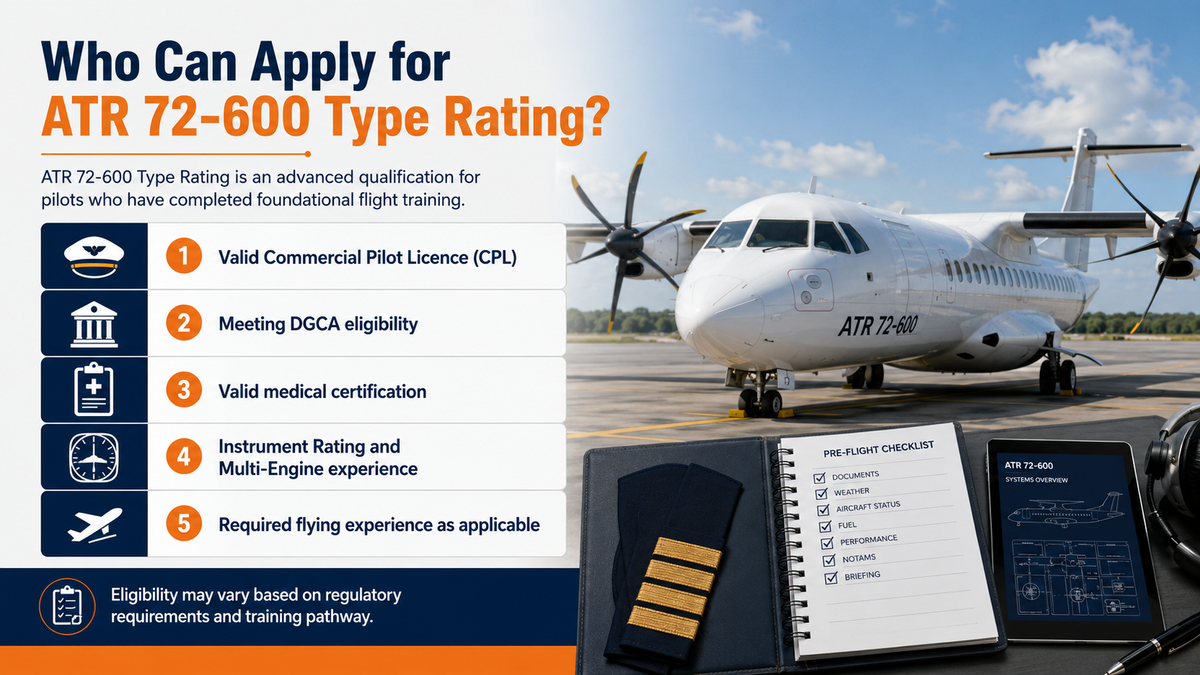
ATR 72-600 Type Rating is an advanced qualification designed for pilots who have already completed their foundational flight training.
Candidates must fulfil specific eligibility requirements before beginning the programme:
- Valid Commercial Pilot Licence (CPL)
- Meeting DGCA eligibility,
- Required medical certification
- Instrument Rating and Multi-Engine experience
- Required flying experience as applicable
- Valid medical certification
The exact eligibility criteria can vary based on regulatory requirements and training pathway.
Candidates should always confirm current DGCA requirements before enrolling.
ATR 72-600 Pilot Career Path in India
A typical pathway for an aspiring ATR pilot looks like this:
Step 1: Fulfil DGCA Class 1 Medical and aviation requirements
Step 2: Complete Commercial Pilot Licence (CPL) training course
Step 3: Undertake Multi-Engine and Instrument Rating training requirements
Step 4: Obtain an ATR 72-600 Type Rating
Step 5: Apply for airline opportunities
Step 6: Build experience and progress towards senior pilot roles
The exact requirements may vary depending on airline recruitment policies, regulatory requirements, and individual experience.
What Does ATR 72-600 Type Rating Training Include?
An ATR 72-600 Type Rating programme is designed to transition qualified pilots from general commercial flying knowledge to aircraft-specific operations. The training focuses on developing the technical knowledge, operational skills, and cockpit discipline required to safely operate the ATR 72-600 in a multi-crew airline environment.
The programme combines classroom training, aircraft systems learning, simulator sessions, and competency evaluation to prepare pilots for commercial operations.
The major components of ATR 72-600 Type Rating training include the following:
- ATR 72-600 Ground School Training
- Full Flight Simulator Training
- Multi-Crew Cooperation (MCC) and Cockpit Procedures
- Skill Test and Qualification
ATR 72-600 Type Rating Training at FSTC
FSTC offers ATR 72-600 Type Rating training through its Approved Training Organisation (ATO) framework, providing pilots with structured aircraft-specific training and simulator-based learning.
The programme is designed for qualified pilots who want to develop ATR aircraft expertise and prepare for opportunities in regional airline operations.
With experienced instructors, advanced simulator facilities, and a structured training approach, FSTC helps pilots build the technical and operational skills required for ATR 72-600 flying.
Why Choose FSTC for ATR 72-600 Type Rating Training?
Choosing the right pilot training organisation is one of the most important decisions for a pilot.
FSTC provides structured ATR 72-600 Type Rating training designed to prepare pilots for professional airline operations.
The training focuses on:
- Aircraft-Specific Knowledge: Pilots develop an understanding of ATR 72-600 systems, operational procedures, and aircraft performance.
- Simulator-Based Learning: Simulator sessions help pilots practise real-world operational situations, including normal procedures, emergency handling, decision-making scenarios, and multi-crew operations
- Aviation-Focused Training Environment: FSTC’s experience in professional pilot training helps candidates understand the expectations of commercial aviation.
Future Scope of ATR 72-600 Pilots in India
The future of ATR pilots in India looks positive as regional aviation continues to expand.
Important factors supporting future demand include:
- Increasing air travel demand from smaller cities
- Expansion of regional airline networks
- Growth of smaller airports
- Requirement for experienced turboprop pilots
The Indian aviation sector is expected to require a growing number of trained aviation professionals as fleet expansion continues.
This creates an opportunity to look beyond traditional career routes and consider specialised aircraft qualifications that align with future aviation demand.
Frequently Asked Questions About ATR 72-600 Type Rating
Is ATR 72-600 Type Rating a good career option in India?
The ATR 72-600 Type Rating can be a valuable option for pilots interested in regional airline operations. Increasing regional connectivity and fleet expansion are expected to support future opportunities.
Are ATR pilots in demand in India?
With regional airlines expanding operations and adding ATR aircraft, the requirement for ATR-qualified pilots is expected to increase.
How long does an ATR 72-600 Type Rating take?
The duration depends on the training organisation and regulatory requirements. FSTC lists its ATR 72-600 Type Rating programme with approximately 45–60 days of training, including ground training and simulator sessions.
Prepare with FSTC Before the Market Expands
Aviation careers reward preparation.
Pilots who wait until recruitment demand reaches its highest point may find themselves competing with many other candidates. Those who plan early and complete relevant qualifications can be better positioned when opportunities arise.
With India’s regional aviation sector expanding, the ATR 72-600 is expected to become an increasingly important aircraft in domestic operations.
FSTC’s structured ATR 72-600 Type Rating programme helps aspiring pilots develop the knowledge and simulator experience required to move closer to their professional flying goals.
If you are planning your CPL journey or looking for your next step after becoming a commercial pilot, now is the right time to explore ATR 72-600 Type Rating opportunities.
Call: +91 8527698320 or +91 9289634111Email: marketing@fstcfto.in
Prepare today for the regional aviation opportunities of tomorrow with FSTC.