
Type Rating in India: Cost, Duration, A320 & B737 (2026)
After obtaining your Commercial Pilot Licence (CPL), choosing the best type-rating programme is one of the biggest training decisions. It involves a significant financial commitment, selecting an aircraft type and planning your next step towards airline employment.
FSTC indicates that a typical type-rating programme takes six to eight weeks. Meanwhile, IGRUA’s 2026 admission notice lists optional A320/B737 type-rating training through FSTC at ₹17 lakh as part of that specific programme. Your actual costs, inclusions and training timeline may differ, so obtain a written quotation before committing.
The right decision depends on what the training covers, which aircraft variant you need and the airline entry route you intend to pursue.
What is a Type Rating?
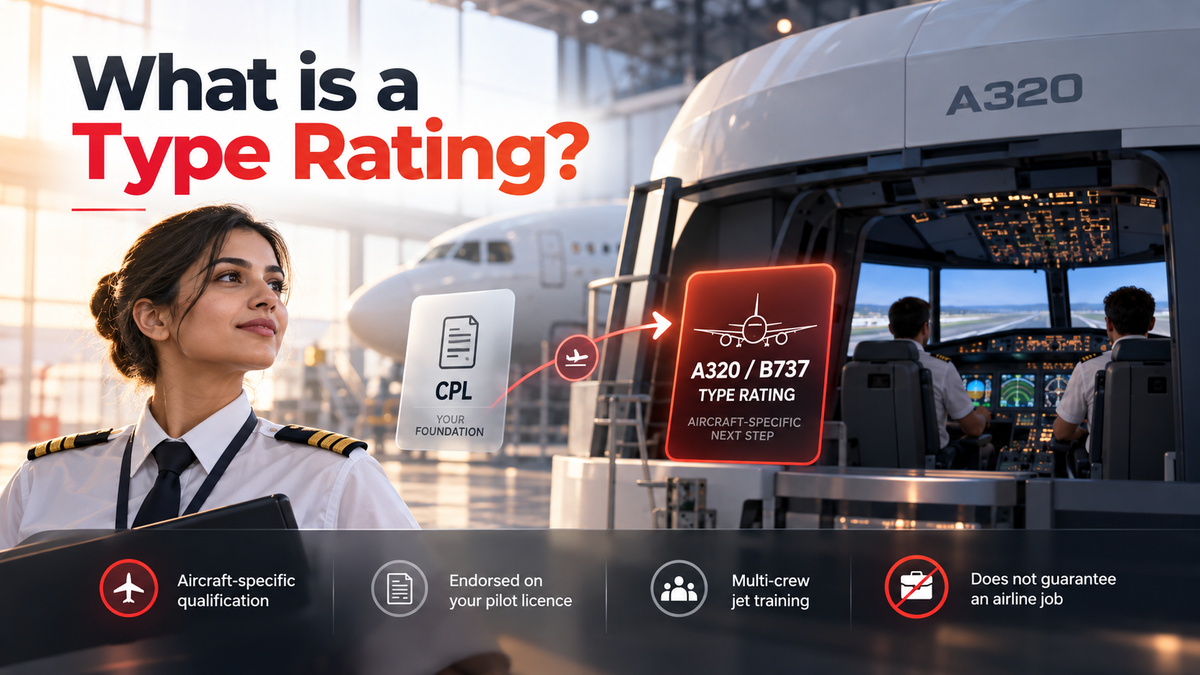
A type rating is an aircraft-specific qualification endorsed on your pilot licence. It demonstrates that you have completed the required training and assessments for that aircraft type.
Your CPL provides the foundation for professional flying. An A320 type-rating or B737 type-rating course develops the knowledge and skills needed to operate that particular jet in a multi-crew environment.
However, completing a type rating does not guarantee an airline job. Recruitment, operator-specific training and the requirements for release to normal airline duties involve additional stages.
It is important to distinguish between three milestones:
- Course completion: You have completed the prescribed training and assessments.
- Licence endorsement: The aircraft qualification has been added to your licence.
- Airline operational readiness: You have met the employer’s applicable training, checking and supervised-flying requirements.
How Much Does Type Rating Cost in India in 2026?
There is no single price that applies to every A320 or B737 applicant. The useful figure is the cost of the complete training package you need.
A specific published reference is available in IGRUA’s 2026 entrance advertisement:
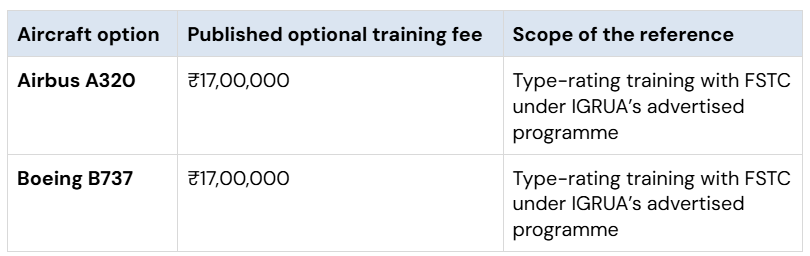
The advertisement groups A320 and B737 at this price. It does not establish an all-inclusive retail fee for every applicant, and it does not itemise taxes, base training, accommodation or additional training.
Use it as a programme-specific price reference, then request your own current quotation. FSTC’s type-rating FAQs confirm that fees vary by aircraft and whether base training is included.
What Should Your Type-Rating Quote Include?
Before comparing two fees, put their inclusions side by side.
Cost component What to confirm in writing
Ground training Classes, learning materials, online access and examinations
Simulator training Device types, sessions, hours and individual allocation
Assessments Examiner charges, skill tests and any recheck fees
Base training Whether included, who arranges it, and the applicable cost
Additional training Charges if further instruction or another assessment is required
Administration Documentation support and any separately payable endorsement charges
Living expenses Accommodation, meals and local transport
Taxes and payment terms Final payable amount, instalments, cancellation and refund conditions
The total number of simulator sessions alone can be misleading. Ask how the training hours are divided between Pilot Flying (PF), who controls the aircraft, and Pilot Monitoring (PM), who supports the flight and cross-checks key actions. You should also distinguish between fixed-base simulator practice and full-flight simulator training.
In order to estimate the full cost, add any compulsory expenses excluded from the quoted package:
Total planned expenditure = quoted course fee + excluded compulsory costs + living and travel expenses + a contingency allowance.
How Long Does an A320 or B737 Type Rating Take?
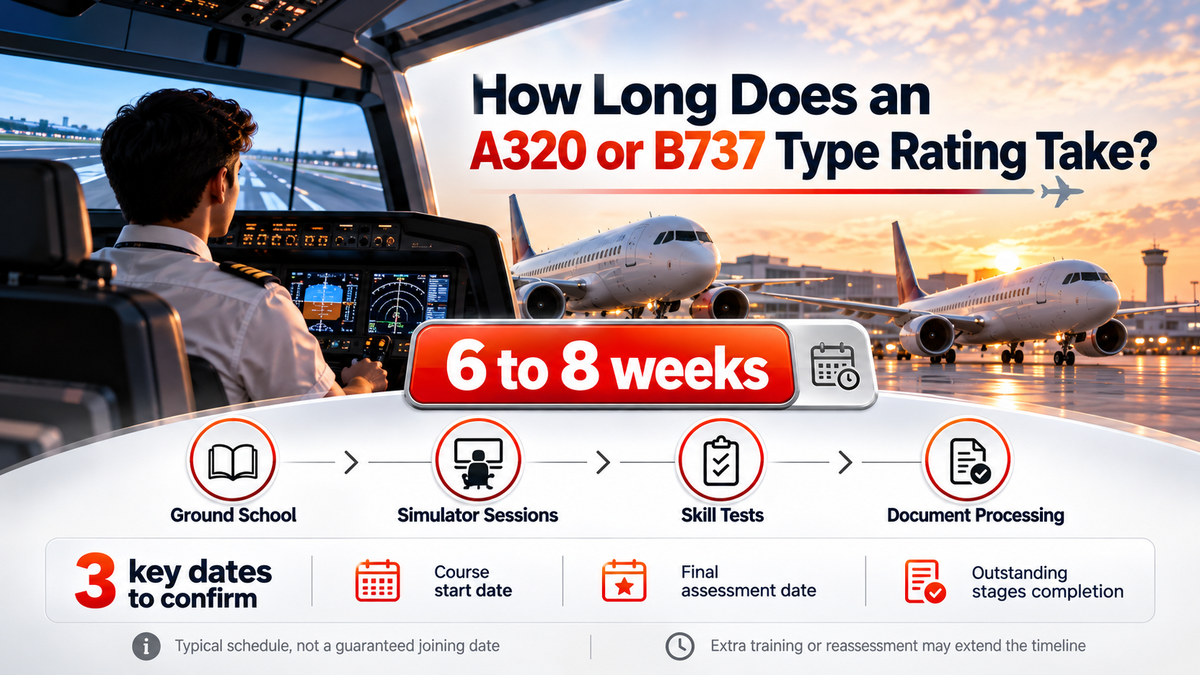
FSTC’s published estimate is six to eight weeks, covering ground school, full-flight simulator sessions, skill tests and document processing. Treat this as a typical schedule rather than a guaranteed endorsement or joining date.
Your actual timeline depends on your readiness, the training schedule, assessment results and the availability of any separately arranged stages.
Confirm Three Key Dates Before Enrolling in a Type-Rating Course
Ask the training provider to confirm the following in writing:
- The confirmed course start date, including access to preparatory material.
- The planned final assessment date, with clarity on what the course includes.
- The expected completion dates for outstanding stages, such as base training or endorsement processing, where applicable.
Also, clarify what happens if you need additional training or do not pass an assessment on your first attempt. A realistic schedule should explain how extra simulator sessions or reassessments will be arranged and charged.
If you are planning a late-2026 intake, check whether training or administrative processing could extend into 2027. Build that possibility into your financial and career plans rather than relying solely on the advertised course duration.
What Happens During A320 and B737 Type-Rating Training?
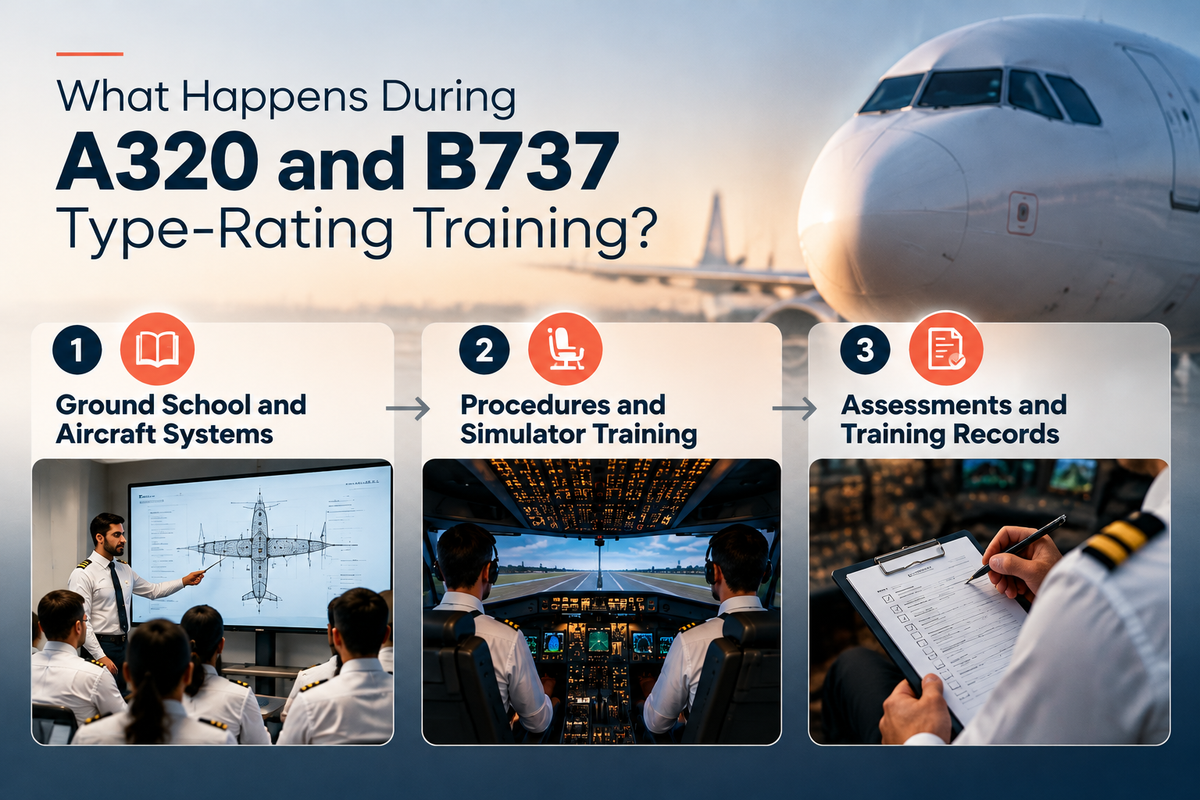
Both A320 and B737 type-rating courses require concentrated study and practical application. Although the aircraft systems and procedures differ, both programmes require you to manage a complex aircraft, follow standard operating procedures and work effectively with another pilot.
Ground School and Aircraft Systems
Ground school covers aircraft systems, operating limitations, performance and procedures. Understanding how systems interact matters as much as remembering individual facts.
Before training begins, revise instrument flying, performance calculations and basic aircraft systems. Once enrolled, follow the training organisation’s current manuals and approved learning materials.
Avoid mixing procedures from unrelated operators or aircraft variants. Similar-looking documents can contain different operating assumptions and instructions.
Procedures and Simulator Training
Procedures training develops cockpit familiarity, checklist discipline and crew coordination. Full-flight simulator sessions then allow you to practise normal operations and respond to abnormal situations and emergencies in a controlled environment.
FSTC’s published type-rating programme includes ground classes, fixed-base and full-flight simulator sessions, and line-oriented flight training.
Use each training debrief to identify a small number of specific improvements. Rather than simply deciding to “study more,” determine whether you need to strengthen your systems knowledge, workload management, procedural accuracy or communication.
Assessments and Training Records
After completing the required training, you must pass the applicable assessments and skill tests. Your training records must also support the type-rating endorsement application.
The DGCA type-rating training requirements set out the importance of approved facilities, instructors, examiners and documented training.
Before enrolling, ask your training provider to confirm the current requirements applicable to your course, which assessments are included in the package and who is responsible for submitting the documents required for your licence endorsement.
What is the Difference Between Base Training and Airline Line Training?
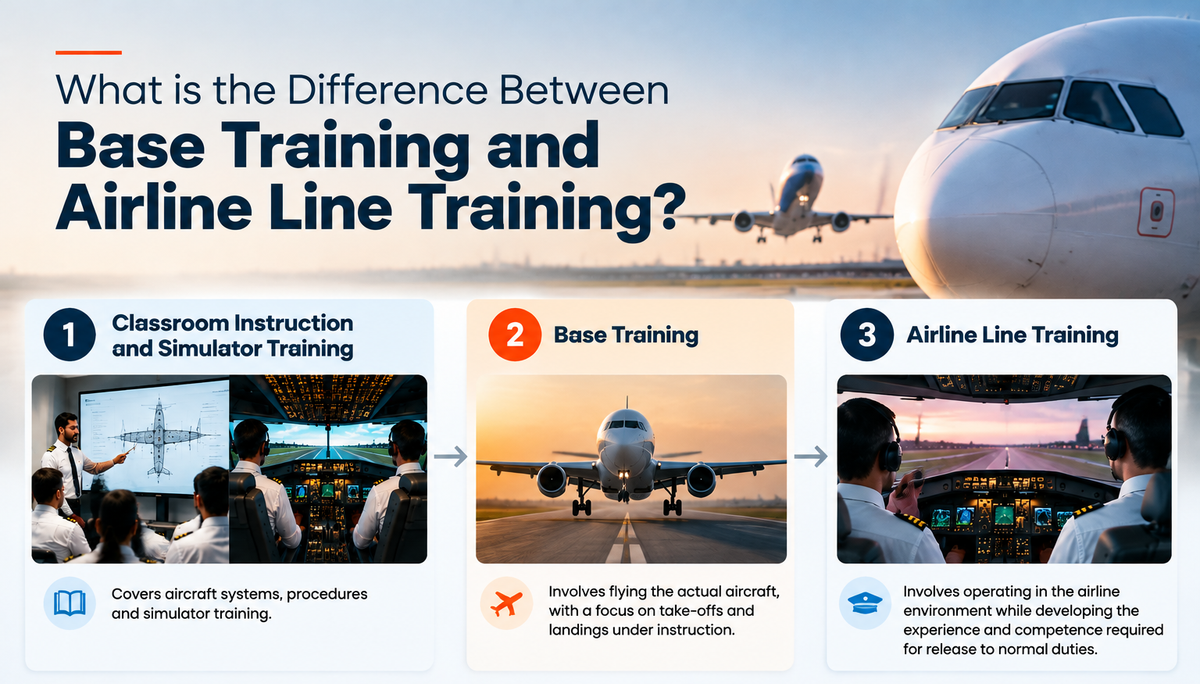
Base training involves flying the actual aircraft, with a focus on take-offs and landings under instruction.
Line flying under supervision involves operating in the airline environment while developing the experience and competence required for release to normal duties.
These are separate stages from classroom instruction and simulator training. Airbus explains the stages separately in its type-rating training overview.
When planning your Indian pilot training pathway, confirm which stages apply to your experience, course approval and intended airline operator. Not every type-rating package includes base training, and simulator training does not automatically include airline line training.
If a provider mentions Zero Flight Time Training (ZFTT), ask it to explain the eligibility criteria and the applicable regulatory approvals. ZFTT does not mean that every first-time applicant can automatically skip aircraft training.
A320 vs B737 Type Rating: Which Should You Choose?
Start by identifying the airline roles you can realistically pursue and the aircraft qualifications they require. The popularity of an aircraft type alone is not enough to justify the cost of a type rating.
Also read: How to Choose the Right Type Rating After CPL in India
Choose the Aircraft That Matches Your Airline Career Path
IndiGo’s flight-operations careers page distinguishes Junior First Officer requirements from experienced First Officer requirements. Its published First Officer criteria include 200 hours after line release on the A320 family.
This distinction matters because holding an A320 type rating does not automatically make you eligible for every A320 vacancy. Check whether the position accepts newly type-rated pilots or requires additional operational experience.
Similarly, Akasa Air operates Boeing 737 MAX aircraft, but fleet information alone does not confirm current vacancies or establish your eligibility for a particular role.
Before choosing an aircraft type, review the relevant airline recruitment notice and verify:
- Required licence and aircraft endorsement.
- Flying experience and whether fresh type-rated pilots are eligible.
- Medical, language and other document requirements.
- Assessment stages and any specified training arrangements.
Also, look into the significant opportunities for ATR 72-600 type-rated pilots in India.
Are Boeing 737 NG and 737 MAX Type Ratings Interchangeable?
Before enrolling, confirm the exact aircraft qualification included in your type-rating course. If your plan involves moving from Boeing 737 NG training to an airline operating the 737 MAX, ask what differences training and checks would apply, who provides them and whether they are included.
The same principle applies to aircraft variants within the Airbus A320 family. Although variants share common features, your training scope and any additional qualification requirements must match the aircraft you intend to operate.
Always obtain written confirmation of the course scope and any additional training required by your intended airline operator before paying your fees.
Who Can Enrol for Type Rating Course at FSTC?
FSTC’s published eligibility information lists a valid CPL with Multi-Engine and Instrument Ratings, a Class 1 medical and the applicable endorsement clearance. These are the institute’s stated entry conditions; your documents should be reviewed against the particular programme.
Before paying a deposit, submit your licence details, ratings, medical status and relevant flying experience to FSTC’s admissions team. Request written confirmation of your eligibility and clarification of any outstanding prerequisites.
If you hold a foreign pilot licence, clarify the applicable licence conversion and type-rating endorsement process before booking. Training accepted by one aviation authority does not automatically satisfy every requirement imposed by India’s Directorate General of Civil Aviation (DGCA).
Should You Self-Fund a Type Rating Before Securing an Airline Job?
Self-funding a type rating may make sense if you have identified an airline recruitment route that requires the qualification and understand the remaining selection requirements and risks.
However, investing in a type rating solely because an airline is expanding its fleet requires caution. Aircraft orders do not confirm when an airline will recruit pilots at your experience level or whether you will meet its eligibility criteria.
Before committing financially, ask yourself three questions:
- Which specific airline roles will this type rating qualify me to apply for?
- What additional eligibility requirements and selection stages must I complete?
- Can I manage the financial commitment if recruitment takes longer than expected?
If your training is part of an airline-linked programme, review the written terms carefully, including selection conditions, payment arrangements, repayment obligations and withdrawal policies. An association with an airline does not guarantee employment, so make sure the contractual terms are clear before paying.
Plan Your Type Rating With FSTC
FSTC offers A320 and B737 NG type-rating training, with simulator-training facilities in Gurugram and Hyderabad. Its programme combines ground instruction with practical procedures and simulator training.
Bring your licence details, preferred aircraft and intended airline pathway to the discussion. This allows the team to assess your preparation needs and explain the relevant course scope.
Contact FSTC’s type-rating team for a current itemised quotation, eligibility review and batch schedule.
Phone: +91 85276 98320 or +91 92896 34111
Email: marketing@fstcfto.in and info@fstc.in
Frequently Asked Questions
Is B737 Type Rating Always Cheaper Than A320?
No. IGRUA’s 2026 programme lists the same optional fee for both. Individual quotations can differ, so compare the full scope rather than assuming one aircraft must cost less.
Can I Complete Type Rating Abroad and Use it in India?
A type-rating course completed overseas may be eligible for endorsement on an Indian pilot licence, provided it meets the applicable DGCA requirements.
Can I Join an Airline Immediately After the Type Rating Course?
Completing a type-rating course does not guarantee immediate airline employment or a confirmed joining date. You must still meet the airline’s recruitment criteria, complete the required licence endorsement process and fulfil any outstanding operator training, assessments and operational requirements.