
Aviation is one of the world’s most exciting, dynamic and rewarding industries. Whether you want to fly commercial airliners, work in airport management, or pursue a career in aviation safety, the first step to making your goal a reality is choosing the right aviation academy. Enrolling in a reputable aviation academy institute will equip you with the technical knowledge, hands-on training and industry-recognized certifications to make you stand out in a competitive job market.
In this blog, we'll look at how the best aviation academy programs are designed to help you build a successful, long-lasting aviation career.
1. Structured Aviation Academy Courses for Every Career Path
Joining an aviation academy has many benefits, one of the greatest benefits being access to well-structured aviation academy courses tailored to suit various career paths. If you want to be a commercial pilot, cabin crew member, air traffic controller or a ground handling professional, there are specialized courses designed just for you.
Common aviation academy courses are:
- Pilot training programs (PPL, CPL, ATPL)
- Engineering of aircraft maintenance
- Management of airports and airlines
- Hospitality and cabin crew training
- Safety and security of aviation
The courses are designed to meet international aviation standards and therefore the graduates are ready to work from day 1.
2. World-Class Aviation Academy Training Facilities
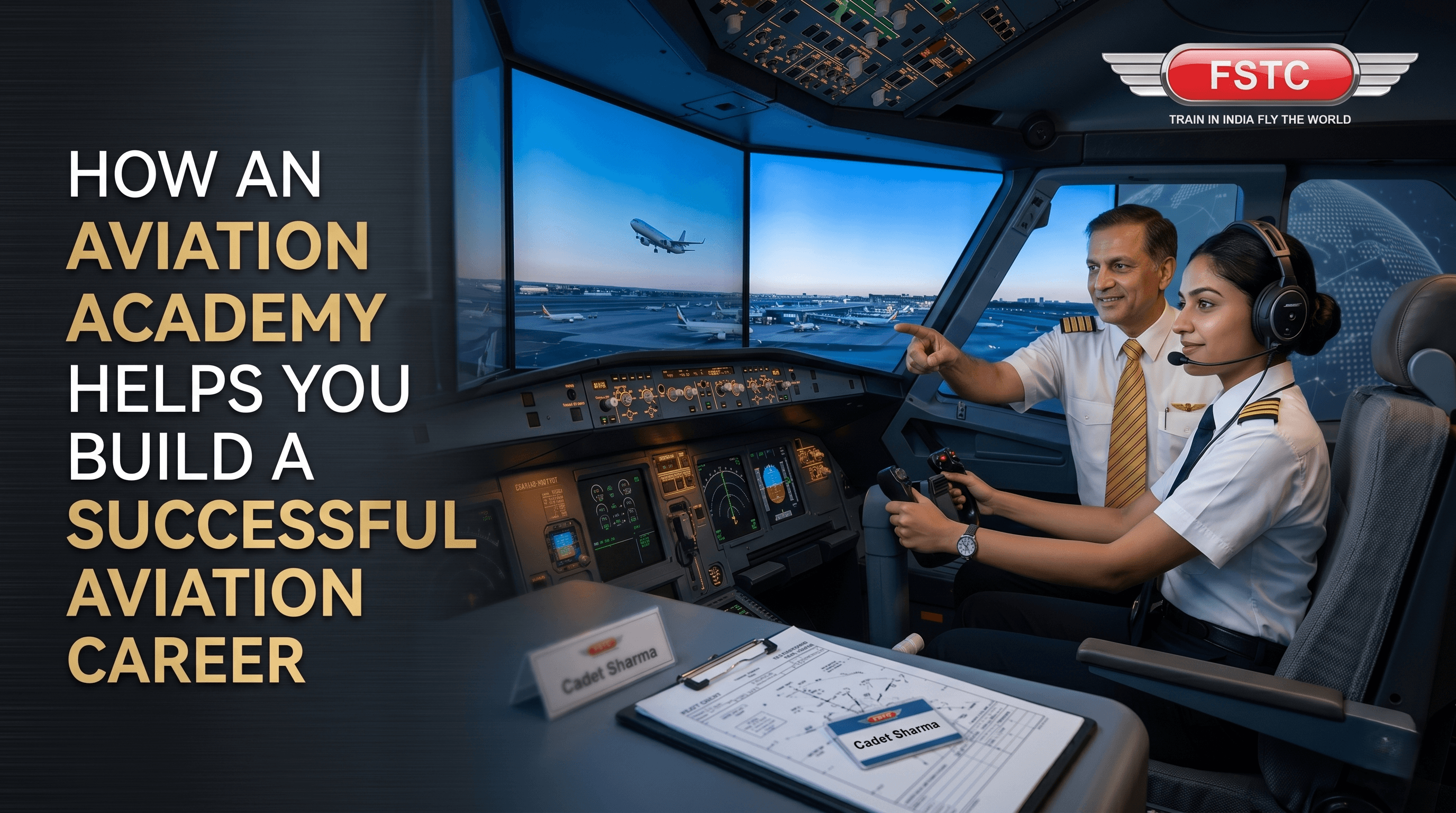
In aviation, theory alone is never sufficient. The industry wants practical skills, split second decision making and real world experience. That is why aviation academy training at a top-rated institution includes access to modern simulators, aircraft and live operational environments.
A top rated aviation academy invests in advanced flight simulators, mock cabin environments and industry standard tools to replicate real world conditions. This type of experiential training develops technical competency, student confidence and performance under pressure. Good aviation academy training ties academic knowledge to industry practice.
3. Recognized Aviation Academy Certification
Aviation employers seek candidates with credible and internationally recognised qualifications. Getting an aviation academy certification from a reputable academy is a sure way to prove your skills and unlock opportunities to work across the world.
Certifications such as these are generally provided by leading aviation academies
- Pilot license approved by DGCA
- IATA-accredited airline management programmes
- Aviation safety certifications (standards of ICAO)
- Ground Handling and Ramp Operations Certificates
With this credential, your aviation academy certification is recognized by airlines, airports and aviation authorities around the world, giving you a leg up in the job market.
4. Specialized Aviation Academy for Pilot Training
The quickest route to the cockpit for those who love flying is to sign up for pilot training at an aviation academy. Pilot training is heavily regulated and is a mixture of classroom, simulator time, and actual flying time.
A dedicated aviation school for pilot training typically involves:
- Private Pilot License (PPL)
- CPL (Commercial Pilot License)
- Instrument Rating (IR)
- Multi-Engine Rating (MER)
- Airline Transport Pilot Licence (ATPL)
To ensure that the future pilots graduate well prepared to meet the airline standards, top aviation academies have highly trained instructors, state-of-the-art aircraft and a well-organized training program.
5. Why Choosing the Best Aviation Academy Matters
Not all aviation schools are the same. Choosing the right aviation academy can make a big difference in your career path, salary and connections. The best aviation academy has experienced faculty, industry connections, modern infrastructure and strong placement support.
The best aviation academy is decided by a lot of factors:
- Approvals from government or international regulatory bodies
- Large alumni network in the aviation industry
- Collaboration with top airlines and aviation firms
- Career counseling and job placement services
- Transparent fee structure and financial advice
Going to a top-rated aviation academy not only enhances your technical skills but also makes you look like a more credible candidate in the eyes of potential employers.
6. Career Opportunities After Graduating from an Aviation Academy Institute
After completing your course from a reputed aviation academy, you will be eligible for a wide variety of exciting career opportunities in the aviation and aerospace sectors.
The career opportunities available to aviation academy graduates are:
- Commercial airline pilot
- Air traffic control
- aircraft maintenance engineer
- Cabin crew/Flight attendant
- Airport operations manager
- Officer responsible for aviation safety
- Aerospace project management
As the global aviation sector is expected to expand exponentially in the coming decade, thousands of new job opportunities will be created for trained professionals. This booming industry will be your gateway with your aviation academy certification.
Conclusion
Choosing the right education is the foundation of a successful aviation career. A reputable aviation academy equips you with the skills, certifications, and practical experience you need to succeed in one of the world’s most demanding industries. Structured aviation academy courses, aviation academy training, globally recognized aviation academy certification, specialized aviation academy for pilot training – the right academy is the foundation of a rewarding career. So, if you are a new student or a professional working to upskill, enrolling in the best aviation academy is the best investment you can make in your aviation future. Pick a top-rated aviation academy today and take your first step towards the skies.
Frequently Asked Questions (FAQs)
Q1. What are the most popular aviation academy courses available?
The top aviation academy courses in demand are commercial pilot training (CPL/ATPL), aircraft maintenance engineering, cabin crew training, airport and airline management, air traffic control and aviation safety courses. Each course is designed to meet certain career goals and international industry standards. Depending on your interests, academic experience, and career goals, you can choose a course.
Q2. How do I choose the best aviation academy for pilot training?
Ensure that the aviation academy you select for your pilot training is approved by the concerned aviation authority, like DGCA (India) or FAA (USA). Look for the quality of their aircraft fleet, simulator technology, instructor experience, flight hours offered and student placement record.” You can look for a clear curriculum, regulatory approvals, and a history of turning out successful commercial pilots at a top-rated aviation academy.
Q3. Is aviation academy certification recognized internationally?
Yes, the aviation academy certifications are accepted by the accredited institutions worldwide. Airlines, airports, and aviation authorities worldwide accept certifications that conform to ICAO (International Civil Aviation Organization) and IATA (International Air Transport Association) standards. Before you sign up, it’s worth making sure that the aviation academy institute you choose has all the required accreditations.
Q4. How long does aviation academy training typically take?
The duration of aviation academy training varies by program. Cabin crew and ground handling training are shorter courses that can last anywhere from 3 to 6 months. Pilot training programs like CPL may take between 18 months and 3 years, depending on the license type. The Aircraft Maintenance Engineering courses are usually of 2 to 3 years duration. Always cross-check the timeline with your chosen Aviation academy institute before admission.
Q5. What makes a top-rated aviation academy different from others?
Regulatory approvals, experienced instructors, state-of-the-art training equipment, strong industry tie-ups, and high placement rates can identify a top-rated aviation academy. These institutions provide a comprehensive range of assistance, from enrollment through graduation, including career counseling and interview preparation. Their aviation academy courses are regularly updated to reflect industry trends and global aviation standards, ensuring that their graduates are highly employable.